What happened in China this month? August 2026

July was a relatively quiet month - the most notable announcements were automakers’ half year results. In August, we got back up to speed with technology development and commercialization announcements.
August contained surprisingly few major automotive customer-facing announcements and was more notable for discussions and announcements related to humanoid robotics.
XPENG raised funding for their humanoid robotics activities, Black Sesame Intelligence showcased new robotics computing platforms and EVE Energy announced participation in standards development.
Investor interest in robotics continued to grow, highlighted by Unitree's IPO process, Hesai Technologies’ inclusion in a Morgan Stanley Humanoid Robot prospectus.
The strategic question is no longer whether automotive technologies can be applied to robotics. The industry increasingly accepts that perception systems, AI models, compute platforms and autonomy software can be shared. The more important question is whether humanoid robotics can generate meaningful commercial returns from technologies originally developed for vehicles.
Automotive companies may not become major robot manufacturers, but automotive manufacturing could become one of the first commercial deployment environments for humanoid robots.
In this month's China Insight, we look at how Chinese automotive companies are entering robotics and whether automotive manufacturing is the first real opportunity for deployment.
What is the industry assuming?
Investors appear convinced that humanoid robotics will become a major industry. Companies pioneering computer vision and AI models are looking to find other commercial opportunities outside automotive for their technology and humanoid robotics is projected to be one of the largest.
For now, automotive remains the primary commercial application for AI, sensors, compute platforms and autonomy technologies but it appears that assumption is being challenged.
Most are assuming that humanoid robots will become a major new industry and focus on robot capabilities, degrees of freedom and positioning within the robotics technology stack.
While technology and performance remain important, the monitoring of commercial opportunities shouldn’t be forgotten.
Much of the discussion around humanoid robotics focuses on which company will build the leading platform. We believe the more important question may be who deploys humanoid robots first and if they can generate measurable value.
Is humanoid robotics solving a manufacturing problem, or are robotics companies searching for a market?
Potentially a bit of both, but the technology appears to be useful.
August provided several examples.
XPENG announced that its robotics business had raised more than US$900 million at a valuation exceeding US$6.3 billion. The company described the funding round as the largest private financing event in China's embodied AI sector. XPENG stated that proceeds would support humanoid robot development, large-scale production and commercialization.
XPENG has repeatedly referred to itself as a "Physical AI" company and gas highlighted progress across robotaxis, AI models, AI chips and its IRON humanoid robot programme. Commercial deliveries are planned for 2027, with production capacity expected to ‘scale rapidly’.
Black Sesame Intelligence used the 2026 World Robot Conference to unveil its SesameX multi-dimensional embodied AI computing platform. The company stated that it was extending its automotive-grade AI computing capabilities into service robotics, industrial robotics and humanoid robots.
Both announcements are notable because neither company is approaching robotics as a standalone industry. Instead, they are using technology capabilities originally developed for automotive applications. This potentially reduces commercialisation risk and may allow robotics programmes to benefit from investment already made in vehicle intelligence.
Table 1: Automotive companies and suppliers robotics announcements in August 2026
Company | Position in humanoid robotics stack | August Development |
XPENG | Developer and integrator | Raised >US$900m. Commercial launch targeted for 2027. |
Black Sesame Intelligence | Compute platform supplier | SesameX platform launched at 2026 World Robot Conference. |
EVE Energy | Standards development | EVE Energy's Jinyuan Robotics was selected to participate in the development of industry standards. |
Unitree | Robot manufacturer | IPO process completed |
Hesai | Sensor and Perception supplier | Included in Morgan Stanley Humanoid 100 and highlighted robotics revenue ambitions. |
Why is automotive manufacturing becoming one of the first industries to deploy humanoid robots?
It is still early days and large-scale deployments remain rare but many of the most advanced humanoid robot deployment programmes are linked to automotive manufacturing environments. BMW, Mercedes-Benz, Hyundai, Tesla and Toyota, are already evaluating or deploying humanoid robots in factory environments.
This may not be accidental.
Manufacturing and logistics activities are often highly structured and follow well established processes.
Automotive manufacturers already have experience integrating automation into production through industrial robots. Humanoid robots are unlikely to replace traditional industrial robots, but they may help automate tasks that remain difficult to address with fixed automation systems.
Automotive companies appear to have the scale and financial resources required to pilot this technology. The presence of multiple deployment programmes is evidence of this.
For robotics developers, automotive manufacturing may offer a commercially demanding environment in which technologies can be tested and refined.
Table 2: Automotive industry's most commercially advanced humanoid robot deployment programmes
OEM | Deployment Stage | Commercial progress | Significance |
BMW | Advanced Pilot | Figure robots expanding from production support into sequencing and logistics workflows | One of the most advanced automotive humanoid deployments |
Mercedes-Benz | Pilot | Ongoing Apollo deployments across multiple facilities | Testing scalability across multiple production environments |
Hyundai | Early deployment | Atlas deployed in factory operations. | Internal robotics capabilities through Boston Dynamics ownership |
Tesla | Internal deployment | Internal factory deployment and production ramp discussed during 2026. | Potentially largest future deployment if scaled across global factories |
Toyota | Commercial pilot | Commercial deployment announced in 2026. | Clear example of real-world operational use |
Collectively, these programmes may suggest that automotive manufacturing is emerging as one of the first sectors willing to test humanoid robots under real commercial operating conditions. While volumes remain limited, the concentration of programmes within the automotive industry is notable.
What should the industry look out for next?
While robotics dominated the discussion in August, Chinese companies continued their international expansion efforts across multiple automotive sectors.
Table 3: Summary of expansion activities in August.
Company | Country or region | Subject |
WeRide | Denmark | Intended expansion of robotaxi services |
Croatia | First robotaxi rides available through Uber. | |
Leapmotor | Argentina | Entering market through Stellantis network. |
Infypower | South America | Raising awareness of event attendance |
Li Auto | Kazakhstan | Li L9 to be made available on the market in Kazakhstan. |
Regarding robotics, keep an eye out for actual commercial use cases of humanoids in automotive supply chains, in particular any pilot programmes that have progressed (or not!).
If you’re looking to keep track of the other new products and announcements in China’s automotive market, including OTA updates and chipset and software developments, SBD’s China Innovation Tracker provides a quarterly view of the most innovative technologies and features entering the market, both in China and from Chinese companies globally.
Mike’s insight:
I’ll be back in September with the next “What happened in China?” update.

"The race to build humanoid robots is receiving a lot of attention, but deployment activities may prove equally important. I think that humanoid robots will only become an automotive story when deployment creates a measurable competitive advantage.
The automotive industry is unlikely to determine which humanoid robot platform succeeds, but it may play a role in proving whether the technology can deliver commercial value.
For automotive companies, the more important question is whether early adopters can translate robotics into measurable improvements in manufacturing efficiency, logistics performance, or operating costs"
Mike Levet - Senior Analytical Reports Specialist at SBD Automotive
If you or your team would like access to the Auto China 2026 Premium Report or to understand how the highlighted technologies, partnerships and market dynamics could impact your strategy, we invite you to get in touch. Email info@sbdautomotive.com to connect with one of our experts and discuss your specific requirements. |
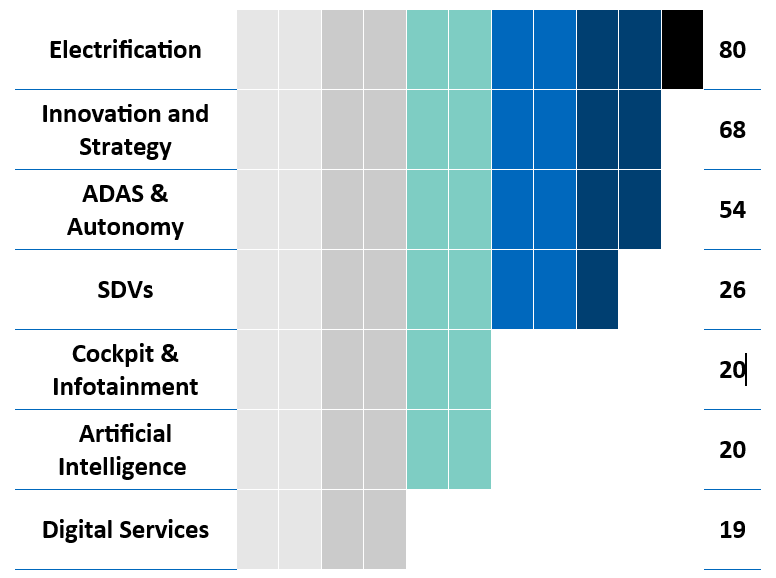
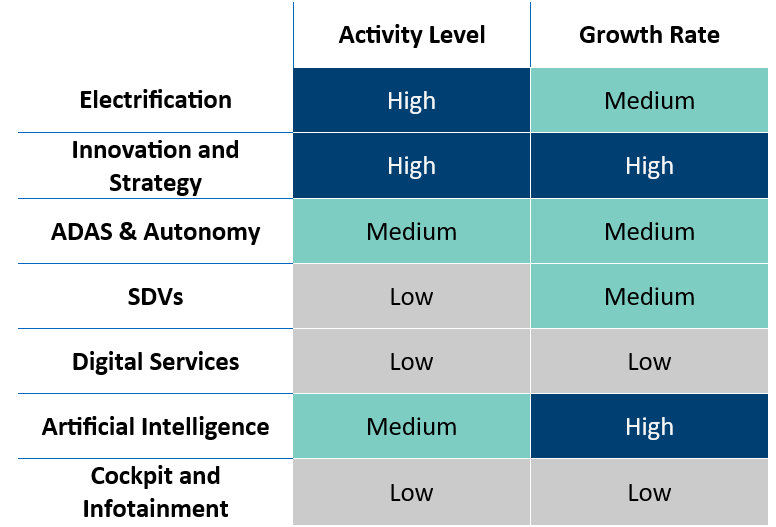
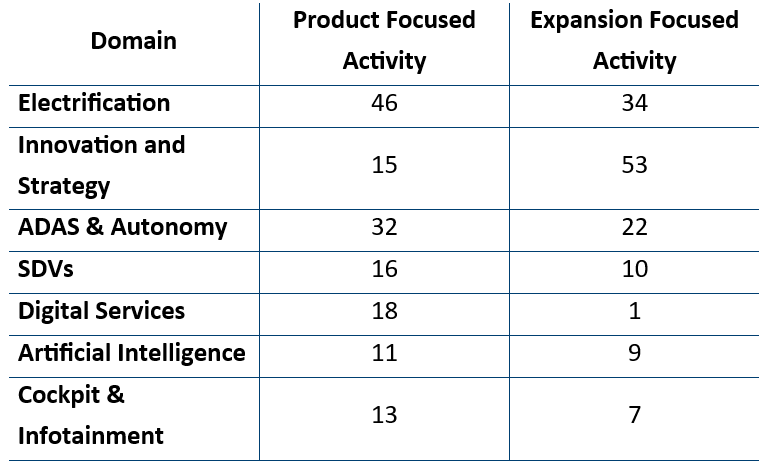
Summary of activity in 2026 so far: