What happened in China – October 2026
Paris Motor Show debrief: How prepared are Li Auto, AVATR and AITO for Europe?

The 2026 Paris Motor Show was held in October and was well attended by automakers, in particular those from China. Visitor attendance increased over 2024 and from my perspective the event was a success.
The Paris Motor Show has given us plenty to talk about. Much of the conversation, during and after the show, has been around commercial, product and organizational localization activities of Chinese automakers. For example, GAC announced their new CARE+ service in Europe and Leapmotor announced plans to use Stellantis manufacturing facilities in Europe.
As well as practical localization announcements, Li Auto, AVATR and AITO discussed their strategic intention to enter the European market. They may be considered the next wave of Chinese automakers looking to make vehicles available on the market in Europe.
In this edition of ‘What happened in China’ I will identify their localization activities, explore their chances of success and give my verdict on who to watch most closely.
Who are Li Auto, AITO and AVATR and how are they doing in 2026 so far?
AITO is a joint brand formed by Huawei and SERES and is the first brand in the Huawei Intelligent Mobility Alliance. AITO uses Huawei’s Harmony operating system and autonomous driving systems.
AVATR was formed by Changan Automobile and CATL, and uses Huawei technology but to a lesser extent.
Li Auto began as a startup, develops capabilities in-house and seeks to own more of the software stack.
All three have demonstrated consistent or growing monthly deliveries in China in 2026. Each of their October delivery results was broadly in line with previous months. Li Auto, AVATR and AITO have delivered around 30k, 7k and 25k vehicles per month respectively on average in 2026.
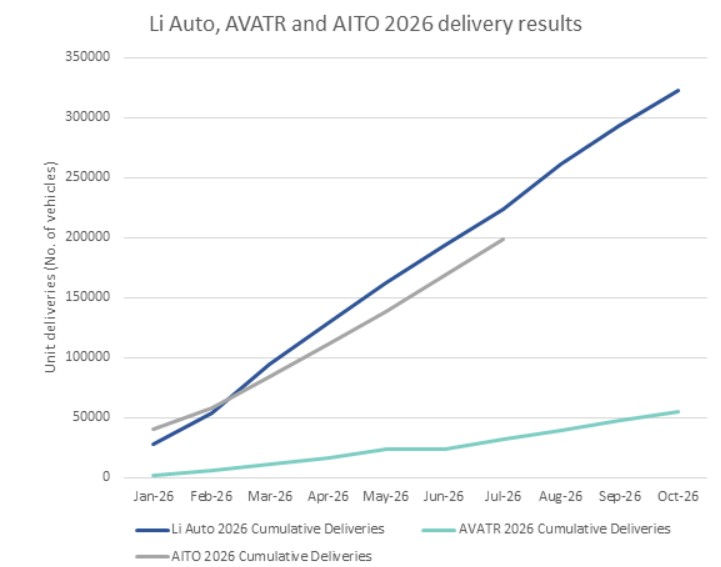
Figure 1: 2026 cumulative delivery data for Li Auto, AITO and AVATR. Data from manufacturers’ official disclosures.

Table 1: Market position in China relative to each other (based on Figure 1)
What do they each need to do, at least, to be successful in Europe?
I believe that some amount of localization of the product, commercial operations and organization is required. The more difficult question is how much localization is enough.
Chinese automakers are carrying out some form of localization measures on the vehicles they are bringing to Europe (at least changing the language of the infotainment!). Adapting navigation interfaces for Europe is potentially a good start. Denza, BYD and XPENG use Google Maps interfaces, for example.
Commercial localization may include establishing sales channels, dealer networks and service operations. Organizational localization could include regional headquarters, engineering center or European manufacturing operations. In my view, commercial localization is just as important as product localization.
What do we know so far about Li Auto’s, AVATR’s and AITO’s intentions for European localization?
Based on the information made available so far, it is too early to say if the investments made will be sufficient, but there are some positive signs.
From an organizational perspective, Li Auto and AVATR have already established a presence in Germany. AITO has not announced a European R&D center but is working with Bosch on localized operations and regulatory adaptation.
Li Auto intends to launch the Li L6 first and has discussed an overseas software platform supporting multiple languages, with localized mapping and navigation including Spotify and Apple CarPlay. Li Auto has announced that it is establishing local sales, delivery and aftersales.
AVATR intends to launch the 06T and 07L first. There is limited information available about AITO’s intentions.
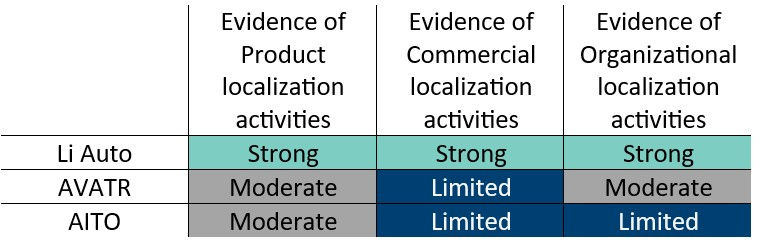
Table 2: Current European localization positions
What to look out for next?
Given their stated near-term entry plans for the European market, I would expect some local dealer partnership announcements soon.
All three automakers have previously partnered with dealer groups in the Middle East suggesting they appear open to partnering to acquire such capability. Though AITO has not yet announced anything, it seems likely it will follow a similar path in Europe. If they do, that is a good sign.
Who is best placed to succeed? Li Auto, AVATR or AITO?
The available evidence suggests that the three brands are not equally prepared.
Predicting success in Europe is tricky, but I would say Li Auto, based on the evidence available, appears to have demonstrated the greatest commitment to localizing for Europe.
AVATR currently appears to have the strongest growth momentum in China and has already identified Norway and Spain as its first European markets. The company has also established a design center in Munich and announced plans to work with local partners on sales and aftersales operations. However, relatively little information has been disclosed regarding its long-term commercial and organizational footprint in Europe.
AITO benefits from Huawei's technology ecosystem and strong domestic market position. However, compared with Li Auto and AVATR, it has provided fewer details regarding its European rollout plans, dealer strategy and organizational presence. As a result, its readiness for Europe remains harder to assess.
Li Auto has discussed localized software, multilingual infotainment, local mapping, sales and aftersales operations, a regional parts distribution center and a European R&D presence. While none of these investments guarantee success, together they suggest a company that is preparing not only to sell vehicles in Europe but also to operate a long-term business there.
I think Li Auto is likely to have the best chance of success.
If you’re looking to keep track of the other new products and announcements in China’s automotive market, or see a more in-depth summary on the Paris Motor Show, SBD’s China Innovation Tracker and Paris Motor Show Flash Report each provides a view of the most innovative technologies and features entering the market, both in China and Europe from Chinese companies globally.
Mike’s insight:

Is it possible to do too much localization?
"Yes. It is easy enough to discuss the ‘supply’ side of the equation. The ‘demand’ side (those looking to purchase cars) is harder to predict. Most discussions about BEVs in Europe are about affordability making Li Auto’s, AVATR’s and AITO’s position potentially less certain.
Every localization decision increases cost, complexity and time-to-market. As a result, they will likely not want to spend too much time or money adapting Chinese models and variants for Europe.
Assessing how BYD, Leapmotor and XPENG approach this process might be useful information that would inform their decisions on how much to change, and how much to leave. The results of those strategies should influence how aggressively Li Auto, AVATR and AITO choose to localize their own European offerings.
Investors may wish to assess whether these automakers have identified the minimum level of localization needed to generate meaningful European demand while preserving their original cost advantages."
Mike Levet - Senior Analytical Reports Specialist at SBD Automotive
If you or your team would like access to the Auto China 2026 Premium Report or to understand how the highlighted technologies, partnerships and market dynamics could impact your strategy, we invite you to get in touch. Email info@sbdautomotive.com to connect with one of our experts and discuss your specific requirements. |
I’ll be back next month with the next “What happened in China?” update.
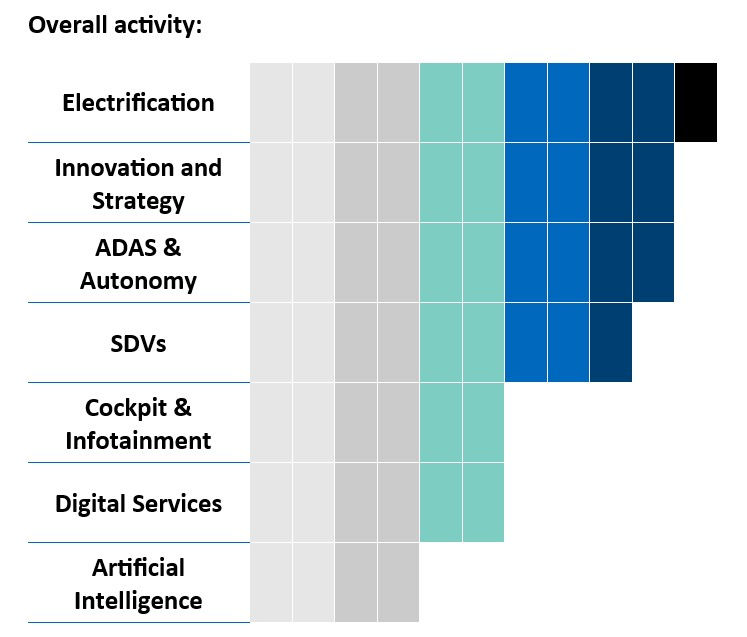
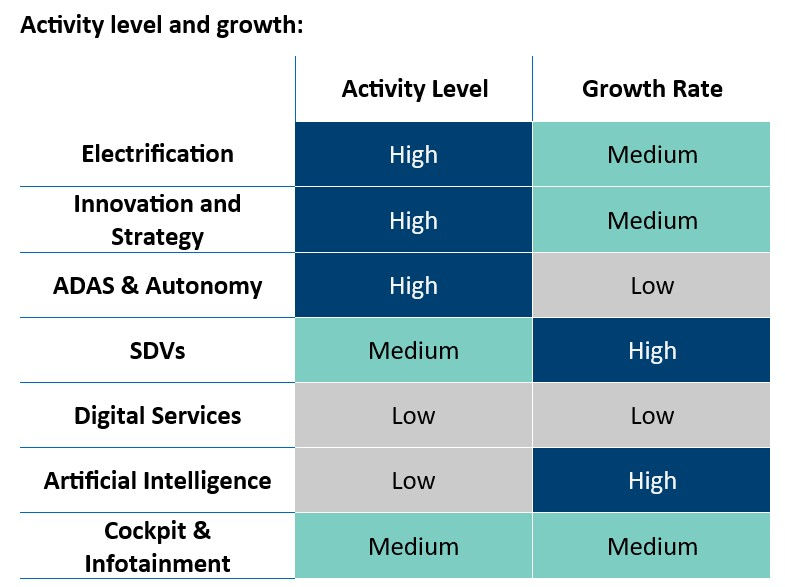
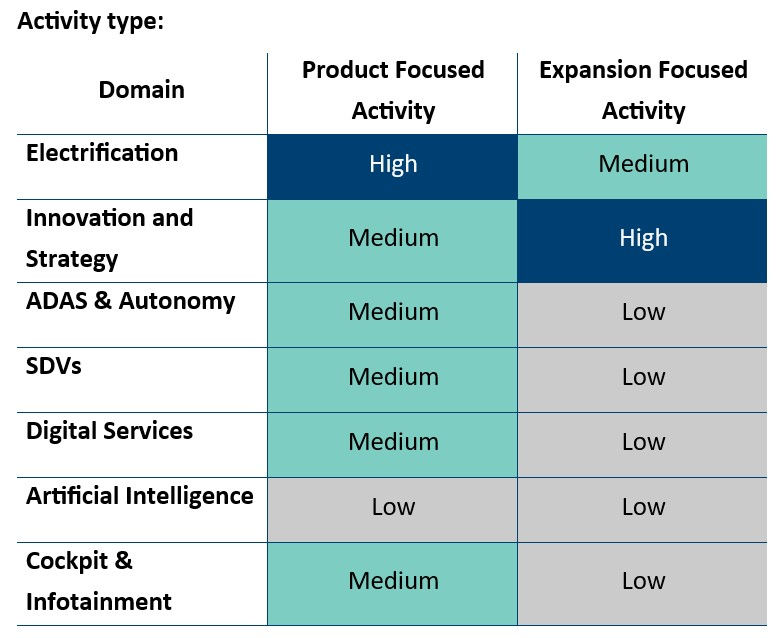
Summary of activity by Chinese automakers and suppliers globally in 2026 so far: