
Is AI the key to the future of connected services in light commercial vehicles?
In 2026, the light commercial vehicle (LCV) industry experienced a fundamental phase in the market. With connectivity at its peak, fleets are under pressure to deliver more with less, such as more uptime, more safety and more efficiency, all while reducing costs and meeting sustainability goals. Connected services are now becoming a decisive factor in vehicle purchase, especially as AI is redefining the connected consumer experience. Likewise, AI transformation in the LCV market is expected to shape the future of connected services in fleet management.
For OEMs: Integrating AI into the Core of Fleet Management
Today’s leading OEMs are no longer viewing AI as a simple, experimental enhancement. Instead, they are embedding advanced AI technologies into the very foundation of their fleet management platforms. This strategic integration enables numerous improvements in operational practices.
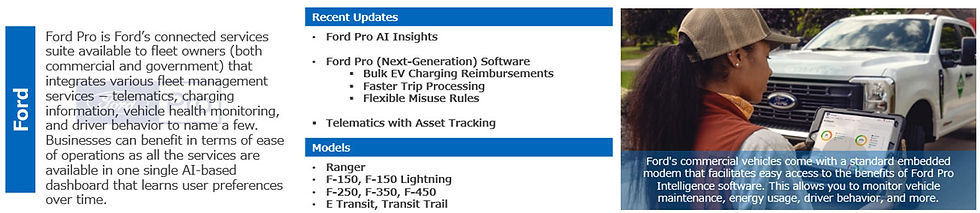
Take Ford Pro, for example. It has integrated AI into its connected services ecosystem to deliver predictive maintenance, intelligent routing, and data‑driven operational insights. By harnessing connected vehicle data and advanced software tools, Ford Pro aims to help fleets optimize uptime, reduce costs, and enhance overall productivity. This is a clear signal that OEMs see AI not just as a differentiator, but as a necessity for modern fleet operations.
Similarly, GM’s Gemini AI initiative represents a bold step forward. Positioned as a next‑generation AI platform, Gemini is designed to leverage vehicle data for smarter decision‑making, improved diagnostics, and enhanced driver support. By embedding AI into the connected services stack, GM aims to create a seamless ecosystem in which vehicles, drivers, and fleet managers all benefit from real‑time intelligence.
These examples highlight a broader OEM strategy: using AI to strengthen integration, monetize through subscriptions, and build trust by offering fleets tangible improvements in efficiency and reliability. In this race, OEMs are betting that fleets will reward those who can translate AI capabilities into measurable outcomes.
Aftermarket that focuses more on Agility and customization
While OEMs focus on scale and integration, aftermarket providers are carving out their own advantage through agility and customization. Their strength lies in their ability to quickly adapt to changing driver needs and create tailored solutions that enhance the overall driving experience.
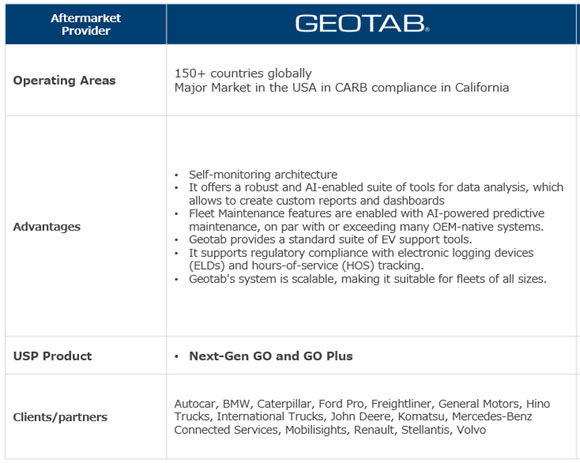
Companies like Geotab are leading the way with AI-powered driver behavior monitoring. By analyzing acceleration, braking, and fuel consumption patterns, Geotab encourages smoother, more eco-friendly driving. This not only reduces costs but also aligns with sustainability goals that are increasingly important to fleet operators.
Webfleet takes safety to the next level with AI-triggered alerts for driver fatigue, distraction, seat belt violations, and phone usage. When combined with forward-facing cameras, these insights enable fleets to capture video clips for training and compliance purposes. This powerful combination provides real-time actionable feedback, leading to significant safety improvements.
Aftermarket providers prioritize customization, while OEMs typically offer fixed service packages. These providers are rapidly adopting AI-driven decision support systems to tackle various industry challenges, such as delivering tailored, multi-brand compatible solutions. In many respects, they act as innovators, enhancing the broader strategies employed by OEMs.
What This Means for Fleets?
The impact is significant. The growth of AI-driven connected services is changing what success looks like in the LCV market. Four main themes highlight:
Connected services have become essential. They are becoming decisive factors in purchasing decisions, especially as fleets seek to maximize asset utilization and reduce total cost of ownership.
AI is the differentiator. Predictive maintenance, intelligent routing, and driver monitoring are not just features — they are essential enablers of operational efficiency. OEMs that embed AI into their platforms will win loyalty, while aftermarket providers that innovate in driver‑centric AI will remain competitive.
Privacy and cybersecurity are critical. Fleets prioritize transparency and oversight, while drivers and regulators demand privacy protections. OEMs that treat privacy as a fleet‑specific issue — with clear controls and robust frameworks — can transform a potential barrier into a trust‑building opportunity.
Premium productivity services are the future. Customers in higher‑priced segments might be willing to pay for uptime, diagnostics, and fast replacement options. The greatest opportunity lies in offering tailored services for specific personas, rather than one‑size‑fits‑all packages.
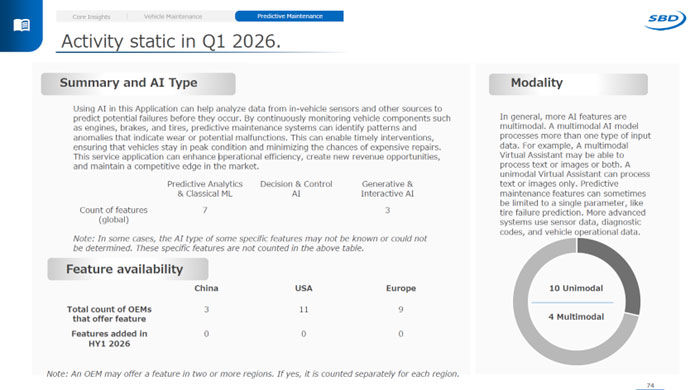
In short, success will hinge on how effectively OEMs and aftermarket providers utilize AI to meet the evolving needs of fleet operations. The essential benchmarks like uptime, safety, cost reduction and trust will serve as the definitive indicators of leadership in this space.
The Road Ahead: AI as the Decisive Factor
The Light Commercial Vehicle (LCV) market is undergoing rapid transformation. Connected services are no longer seen as optional add-ons; they have become essential tools that help fleets improve efficiency, build trust, and remain competitive. Leading OEMs such as Ford and GM are already using AI-powered connected platforms to provide predictive insights, reduce downtime, and enhance overall fleet performance. Meanwhile, companies like GeoTab and Webfleet are introducing new AI-driven capabilities that improve driver safety and monitoring.
“As competition grows, AI is becoming a key factor that sets industry leaders apart. It is not just another feature; it helps fleets make better decisions, increase productivity, and improve customer experiences. Fleets that invest in AI-powered connected services now will be more prepared for future challenges and opportunities. In the coming years, AI will be important for building customer loyalty, achieving operational success, and driving long-term growth in the LCV industry." Leena Khandelwal, SBD Automotive Senior Product Owner |  |
The SBD Automotive 546 - LCV Fleets Connected & Digital Services Guide and 215 - AI for Automotive Guide and now live to download on our hub. If you require access please just email info@sbdautomotive.com to start the conversation.


