
Could connected vehicle technology support more responsible horn use in India?
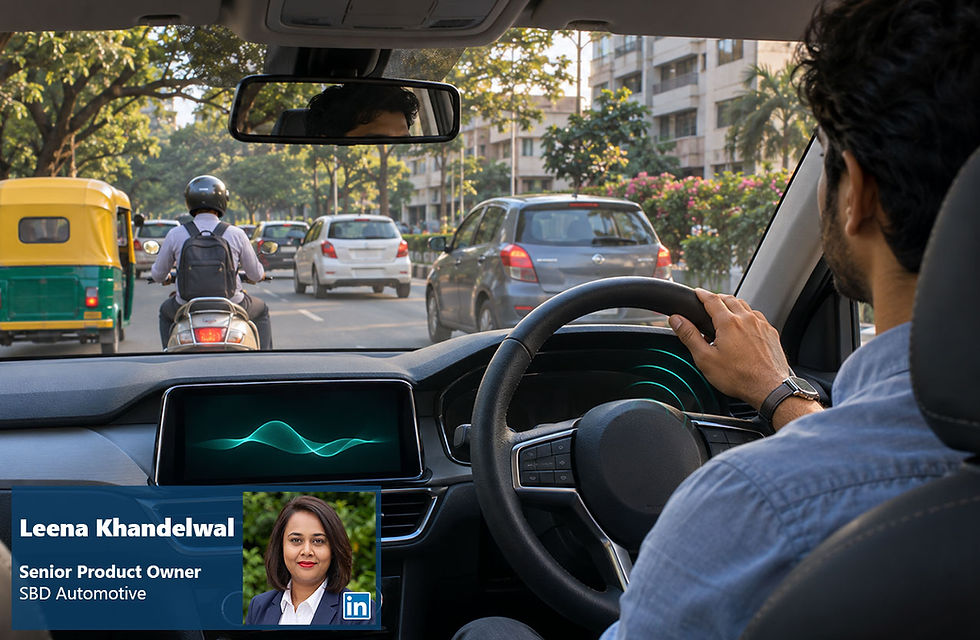
Automakers in India are expanding their connected services beyond infotainment, offering more features for vehicle management, convenience and safety. This creates an opportunity to explore how these services could address a familiar part of everyday driving in India: horn usage.”
In India, the horn often functions as a communication tool. Drivers use it to announce their presence, signal an intention to overtake, alert pedestrians or two-wheelers, and navigate dense traffic. These signals are informal rather than standardized, and their meaning is not always clear.
Common interpretations include:
Passing a truck or slower vehicle: “I’m alongside you. Please notice me.”
Approaching pedestrians, cyclists or two-wheelers: “A vehicle is approaching.”
Warning a vehicle moving into the driver’s path: “Watch out.”
Waiting in congested traffic or at a green signal: “Please move”—often reflecting impatience rather than a safety warning.
Frequent horn use has also influenced vehicle engineering. Industry observers have noted that some OEMs have adapted horn specifications and durability testing to suit Indian driving conditions.
Government Focus: Reducing Unnecessary Honking
Recognising the impact of excessive honking on urban noise, Indian authorities have largely focused on enforcement and behavioural change.
These efforts include:
Enforcement against illegal pressure horns and modified horn systems.
Restrictions on unnecessary or continuous honking under existing traffic regulations.
Silence zones around hospitals, schools and other sensitive areas.
Public-awareness campaigns encouraging responsible horn use.
Although noise reduction remains a policy concern, there is no confirmed nationwide requirement for adaptive, smart or location-aware horn systems.
In the year 2015, one of my favorite automakers tried a campaign - A Missed but Relevant Innovation: Maruti Suzuki’s “No Po Po”
One example of using technology to encourage better driving habits was Maruti Suzuki’s 2015 “No Po Po” initiative.
The campaign combined a horn-counting device with a smartphone app and rewards for honking less. Participants could monitor their horn use and earn incentives for reducing it. Campaign-reported results suggested a 43% reduction in horn usage among participants.
There is no confirmed evidence that Maruti Suzuki subsequently introduced the concept as a widely available production feature or connected service. Still, the initiative offered an early example of how vehicle data, driver feedback and incentives could encourage people to reconsider their habits.
Why This Matters for Connected Services
As automakers expand their apps and connected platforms in India, there is an opportunity to revisit ideas such as “No Po Po”.
OEMs could include horn-use feedback in their driver-behavior services, alongside existing safety and eco-driving insights. Potential uses include:
Driver Behaviour Insights
Showing horn-use frequency and patterns after each trip.
Providing personalised feedback to help drivers reflect on their habits.
Gamification and Rewards
Offering loyalty points or service discounts to encourage reduced unnecessary honking.
Organising community challenges that promote more considerate driving.
Location-Based Reminders
Alerting drivers when they enter designated silence zones.
Providing feedback after trips where frequent honking is recorded.
Fleet and Commercial Vehicle Management
Helping fleet operators understand horn-use patterns across vehicles.
Identifying routes or situations that may need closer attention.
These features would need to recognise that horns serve a safety purpose. A lower horn count alone does not necessarily mean safer driving, and rewards should not discourage necessary warnings.
The broader lesson for OEMs is to build services around local needs. Streaming apps, navigation and voice assistants have their place, but features that address everyday driving challenges could add further value. Horn-use feedback is one opportunity to make connected services more relevant to Indian road users.
Living in India, I often find the constant honking overwhelming when riding my two-wheeler. I cannot always tell whether someone is honking at me or another road user—or what they want me to do. Instead of helping, it sometimes leaves me confused.
OEMs need to explore horn-use feedback as part of their connected services in India. An app showing drivers and riders how many times they honked during a trip could make them pause and think, “Was it all necessary?” That small moment of reflection could help people recognize when they honk out of habit, impatience or frustration, and encourage them to behave differently the next day.
Authorities could also benefit. Anonymised horn-use data linked to locations could highlight places that need closer attention. Frequent honking at a particular spot could prompt an investigation into confusing junctions, blocked lanes or conflicts between pedestrians and vehicles. The data would not explain the cause on its own, but it could provide a starting point for deciding where to investigate and what improvements might be needed.
"In my 12 years in the automotive industry, I’ve seen connected services become more useful in everyday driving. As OEM apps offer more personalised feedback, I see an opportunity to explore horn use in India. Seeing how often I honked during a trip would make me question whether every honk was needed. But that number needs context: some honks may come from habit or impatience, while others warn of hazards on the road. The challenge is to help drivers recognise the difference and reduce unnecessary noise while preserving essential warnings." Leena Khandelwal, SBD Automotive Senior Product Owner |  |


