
MWC Barcelona 2026: Why the “IQ Era” Matters for Automotive
- Umair Siddiqui
- Mar 27
- 5 min read

MWC Barcelona has historically been viewed as a telecom-led event, but in 2026 it became clear that connectivity is no longer the headline story. Instead, the industry is entering what the GSMA described as the “IQ Era”: a phase where networks, devices, and cloud infrastructure evolve into intelligence platforms, rather than simply pipes for data.
With 105,000+ attendees and over 2,900 exhibitors from 207 countries, MWC 2026 reinforced its role as the global benchmark for what the connected economy will look like in the next decade. For automotive, the message was direct: the future of the software-defined vehicle will depend as much on telecom and cloud ecosystems as on traditional Tier 1 and OEM capabilities.
Below are the key MWC 2026 themes that automotive leaders should take seriously.
6G is Moving from Vision to Validation (and Automotive is a Core Use Case)
While 6G is still positioned as a long-term horizon, the tone at MWC shifted from research speculation to early real-world validation. Ericsson and Qualcomm showcased validated 6G radio prototypes, highlighting progress in uplink performance, system efficiency, and coverage. This matters for automotive because uplink-heavy performance is increasingly critical: connected vehicles are becoming rolling sensor networks, generating large volumes of data that must be transmitted for fleet learning, mapping, teleoperation, and cooperative perception. If 6G continues to mature with AI-native foundations, it will likely be shaped around mobility and industrial automation use cases rather than consumer smartphone needs.
The key takeaway is that OEMs should not treat 6G as a marketing concept. It is already becoming an ecosystem alignment exercise, and early engagement will define influence over future standards and service models.

Satellite Connectivity is gaining traction across industry
One of the most commercially relevant themes for automotive was the acceleration of 3GPP-compliant Non-Terrestrial Networks (NTN). Satellite connectivity is no longer an “emergency-only” story; it is rapidly becoming a strategic extension of terrestrial coverage.
MWC featured multiple live demonstrations proving that hybrid satellite-cellular connectivity is now feasible using unified roaming frameworks rather than fragmented solutions.
Most notably:
Cubic and Viasat demonstrated a live satellite voice call for connected vehicles over a standard 3GPP NTN.
Viasat and HARMAN demonstrated satellite-enabled voice calling via the Ready Connect TCU, showing how baseline services such as voice, eCall, and remote assistance can persist in zero-coverage zones.
For OEMs, this signals a shift: hybrid connectivity is moving from premium feature to safety and uptime expectation. As vehicles become service platforms, “always-on connectivity” becomes a fundamental dependency for revenue-generating digital services.


AI-RAN and 5G-Advanced signal the network is becoming an intelligence platform
MWC 2026 was dominated by the transformation of the telecom network into an AI-native platform. This is where automotive implications become significant.
Nokia and NVIDIA announced the first successful live AI-RAN deployment, proving that AI workloads and radio traffic can run simultaneously on shared GPU infrastructure.
Meanwhile, Ericsson and Turkcell signed a 5G-Advanced innovation agreement focused on RedCap and AI-driven automation to enable self-optimizing networks. For connected vehicles, this means:
Lower latency becomes achievable not only through radio improvements, but through predictive and autonomous network optimization
Network slicing becomes more commercially realistic for safety-critical mobility services
Edge computing becomes more deeply integrated with radio infrastructure
This is a critical shift. Automotive connectivity strategies can no longer be built solely around module selection and operator contracts. They must account for programmable, AI-optimized networks as part of the vehicle architecture roadmap.

Digital Sovereignty is emerging as a strategic constraint (not a policy discussion)
MWC 2026 also reflected a clear European and global push toward sovereignty and governance of data, AI models, and digital identity.
Telefonica launched the EURO-3C initiative to support sovereign AI governance, ensuring models remain cyber-resilient and locally governed.
Deutsche Telekom introduced Magenta Security Mobile.ID, positioning the smartphone as a secure identity key where sovereignty remains with the individual.


The “Device Ecosystem War” is expanding into the vehicle
Automotive’s competitive landscape is being shaped by consumer technology players building cross-device ecosystems. MWC 2026 made this explicit.
Xiaomi showcased its Human x Car x Home ecosystem, demonstrating deeper integration across smartphones, smart home devices, and EV platforms. This reinforces the idea that the vehicle is no longer a standalone product; it is becoming an endpoint in a broader digital lifestyle platform.


Xiaomi Miloco & Xiaomi Vision
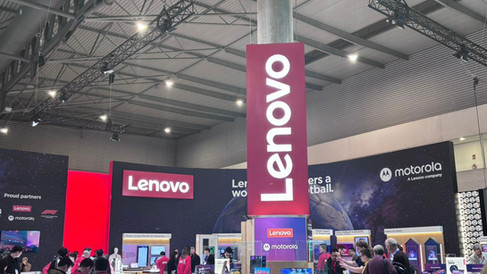
At the same time, Lenovo launched Lenovo Qira, a system-level AI synchronizing across 20+ devices with continuity-based experiences. Qualcomm introduced the Snapdragon Wear Elite platform, enabling wearable devices to run personal AI agents locally via dedicated NPUs.


For automotive, the threat and opportunity is clear:
Consumers will increasingly expect the vehicle UX to integrate seamlessly into their personal AI ecosystem
OEMs risk losing the digital relationship with the driver if ecosystems become dominated by smartphone players
Cross-device identity, personalization, and assistant-based interfaces will become baseline expectations
This creates a strategic question for OEMs: will the car be the center of the ecosystem, or just another screen?
SDVs Will depend on cloud validation and digital twin testing at scale
MWC also highlighted the maturity of validation ecosystems required for SDV development.
Valeo showcased digital twin validation concepts for SDVs, focusing on simulating telecom environments and validating connected vehicle functions across network conditions.
Anritsu highlighted cloud-based validation environments supporting SDV development without physical vehicles, accelerating speed and scalability of testing.
This reflects a growing reality: software-defined vehicles cannot scale if validation remains physical and hardware-bound. OEMs will need cloud simulation, continuous testing, and AI-driven verification frameworks as core development infrastructure.


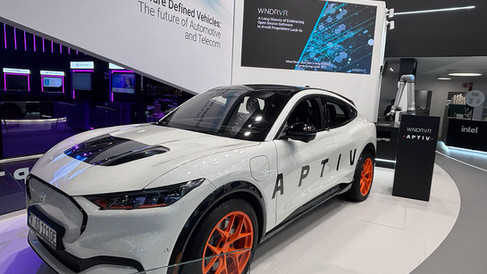
Cloud hosted connectivity test for virtualized SDVs & Vehicle-to-Everything proof of concept powered by 5G
What Automakers should take away from MWC 2026
MWC 2026 made one thing clear: connectivity is no longer a feature — it is infrastructure for intelligence.
The automotive industry is entering a phase where:
Network capability (AI-RAN, slicing, edge compute) directly impacts vehicle functionality
Hybrid connectivity (cellular + satellite) becomes mandatory for resilience and safety
Ecosystem integration will define who owns the customer experience
Sovereignty constraints will reshape cloud and AI deployment decisions
SDV development will require virtualized validation at telecom scale
OEMs and suppliers who treat telecom as “external” will struggle. Those who align early with network, cloud, and silicon roadmaps will gain structural advantage
Want the Full Automotive-Relevant Breakdown from MWC Barcelona 2026?
This article only scratches the surface of what was announced and demonstrated at the event.
SBD Automotive’s MWC Barcelona 2026 Premium Event Report provides a full analyst-level breakdown of the show, including:
The most important technology trends shaping connected mobility
Key automotive-relevant announcements from major exhibitors
Implications of AI-native networks, 5G-Advanced, NTN, and sovereignty
Brand-by-brand insights across leading telecom, silicon, and automotive ecosystem players
If you are building your connected vehicle roadmap, defining SDV infrastructure strategy, or assessing future partnership opportunities across telco and cloud ecosystems, this report is designed to support executive decision-making.

“Convergence of AI, connectivity, and devices defines next phase AI became foundational at MWC 2026, embedded across devices, networks, and services rather than as standalone features. The focus shifted to AI-driven networks and early 6G readiness, as well as more collaborative ecosystems. Smart devices evolved into context-aware companions, while spatial computing gained traction. At the same time, advances in IoT and satellite connectivity highlighted more distributed, resilient infrastructure, with sustainability and security remaining key priorities.”