
MOVE London: Is the race to scale Software-Defined and Autonomous Mobility now on?
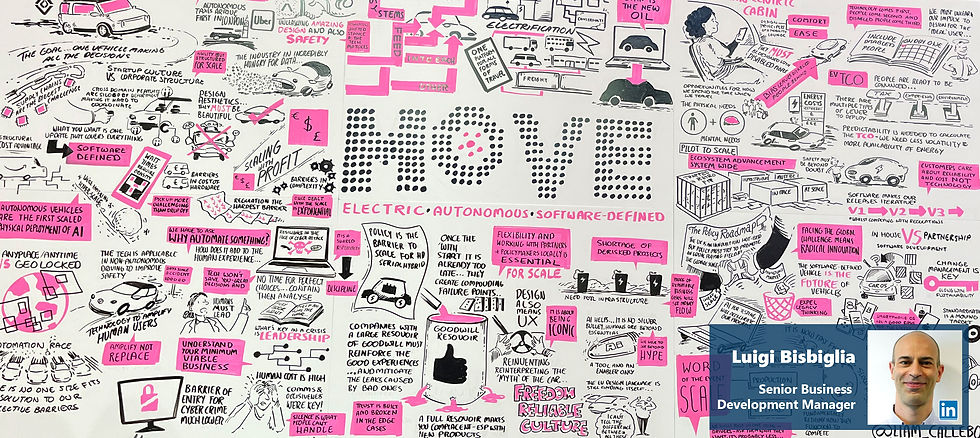
The industry's greatest challenge is no longer proving that new mobility technologies work. The challenge is scaling them economically, globally and safely.
Whether discussing software-defined vehicles, autonomous driving, cybersecurity, or fleet operations, speakers consistently highlighted the same reality, technical innovation is progressing rapidly, but commercialization depends on solving a much broader set of challenges, including supply chains, regulation, system architecture and ecosystem partnerships.
RJ Scaringe, CEO of Rivian, illustrated this shift particularly well. While Rivian's long-term ambition remains making electric vehicles accessible to a much wider audience through a $40,000 vehicle platform, much of the discussion focused on software architecture rather than vehicle hardware. Rivian has spent the past year developing a scalable electrical and electronic architecture for Volkswagen Group, designed to support both high-volume and premium vehicles. The objective is to replace today's fragmented landscape of supplier-controlled ECUs and disconnected software stacks with a centralized operating system capable of managing vehicle functions through a unified platform. Such an approach would dramatically simplify over-the-air updates, accelerate feature deployment and reduce engineering complexity.
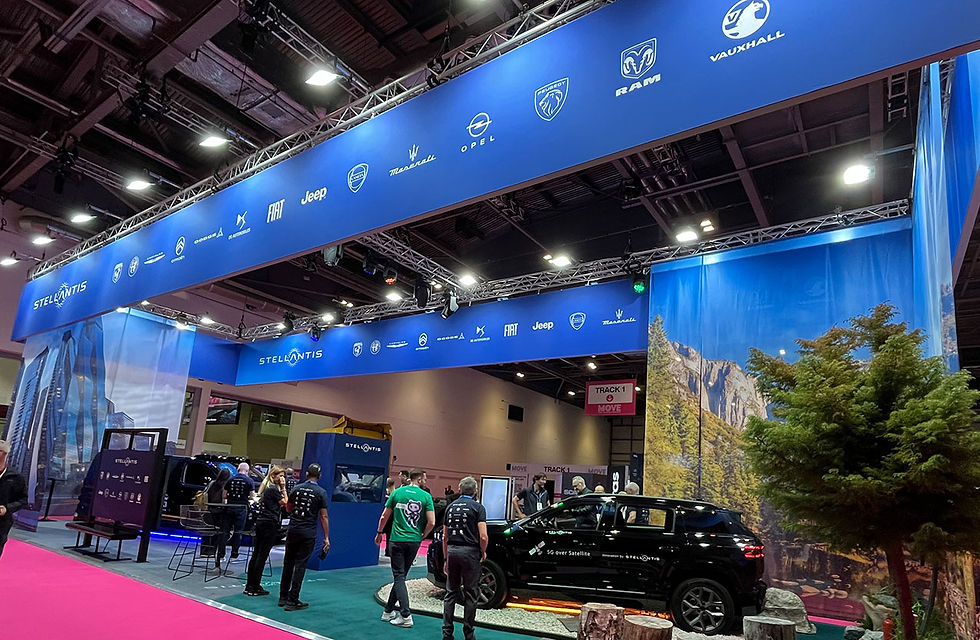
The same logic was visible in the autonomous driving discussions. Speakers increasingly described autonomy not as a standalone product, but as a technology layer that can be integrated across multiple vehicle manufacturers and mobility operators. Wayve's partnership with Stellantis exemplifies this model. Rather than manufacturing vehicles, Wayve focuses exclusively on the autonomous driving stack and licenses its technology to OEMs. Stellantis, meanwhile, sees value in maintaining brand differentiation through customer experience while benefiting from shared technology platforms underneath. This reflects a broader industry trend toward standardization of hardware and software foundations combined with personalization of the user experience.
Pony.ai and WeRide reinforced the message that autonomy is moving from experimentation toward commercialization. Both companies are already operating commercial services and are increasingly focused on deployment scale rather than technological feasibility. Pony.ai highlighted how its next-generation platform will move autonomous vehicle integration directly onto standard production lines, eliminating costly post-production modifications and creating a path toward mass manufacturing. WeRide similarly emphasized partnerships with municipalities, fleet operators, and OEMs as essential enablers of expansion.
Yet despite this progress, speakers repeatedly identified two significant barriers to global scale: regulation and supply chains. Regulatory fragmentation remains a major obstacle, with autonomous vehicle requirements differing significantly across China, Europe, and North America. Several speakers noted that the technology is advancing faster than the regulatory frameworks governing its deployment. At the same time, supply chain resilience continues to be a strategic concern, extending beyond the semiconductor shortages experienced during the pandemic into broader geopolitical competition for critical components.
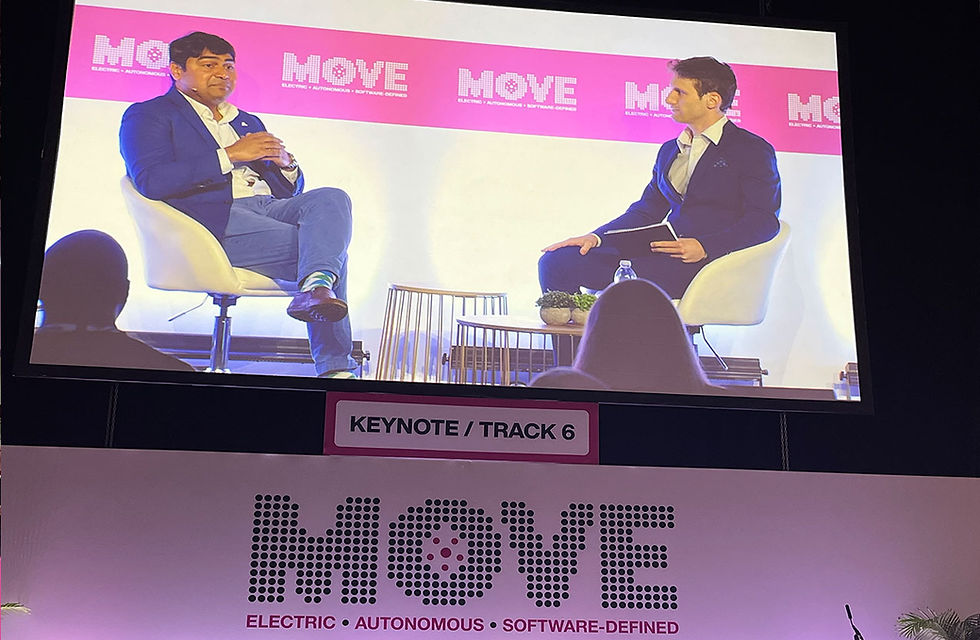
Another noteworthy theme was the industry's growing recognition that technological capability alone is insufficient. Toyota Research Institute offered a contrasting perspective by emphasizing human-centered autonomy. Rather than replacing drivers entirely, Toyota's philosophy focuses on reducing cognitive workload, allowing drivers to concentrate on critical decisions while the vehicle manages routine tasks. This suggests that the next phase of innovation may be less about increasing levels of automation and more about improving the interaction between humans and increasingly capable machines.
The software-defined vehicle discussion further reinforced this transition. Participants agreed that automotive companies must carefully determine which technologies constitute strategic differentiators and which should be sourced externally. Features that create brand value and customer differentiation are increasingly viewed as capabilities that must be developed in-house, while more standardized technologies can be shared across the ecosystem. The long-term goal is a simpler software and hardware architecture that reduces complexity while improving scalability.
Cybersecurity emerged as another critical enabler of this future. Over-the-air updates are increasingly seen as essential for reducing recall costs and continuously improving vehicles after delivery. However, they also raise important questions regarding hardware planning, data protection, and manufacturer responsibility over a vehicle's lifetime. As vehicles become connected software platforms, determining how long manufacturers remain responsible for maintaining security and software support will become a growing industry challenge.
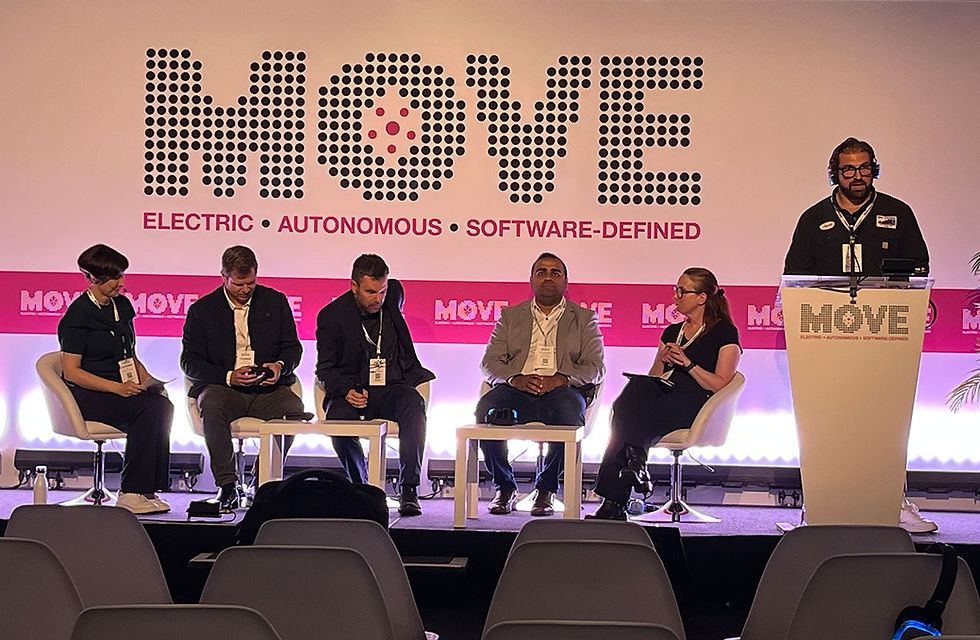
Perhaps the clearest indication of where the industry is heading came from mobility operators such as Bolt. Their focus is not on vehicle technology itself, but on operational efficiency and customer experience. For Bolt, the key metric remains how quickly a vehicle can reach a customer, regardless of whether it is autonomous or human-driven. This highlights an important shift in perspective: autonomous technology is becoming a means to improve mobility services rather than an end in itself.
“Taken together, the discussions suggest that the next phase of automotive transformation will be defined less by breakthrough technologies and more by the industry's ability to industrialize them. Success will depend on creating scalable software architectures, building resilient partnerships, navigating complex regulatory environments, and delivering solutions that create measurable value for customers. The future of mobility appears increasingly software-defined, autonomous, and collaborative—but above all, it will be determined by who can scale most effectively." Luigi Bisbiglia - Senior Business Development Manager |  |
How SBD can help
SBD Automotive can help benchmark your position against the wider industry and identify where action is needed most. To explore how these trends impact your strategy, architecture and supplier roadmap, get in touch with SBD Automotive for a deeper discussion. Email info@sbdautomotive.com |


