CES 2026 Day 2: Ford's Overhauled Tech Strategy, China's Continued Presence and What Was Missing from CES in 2026
Updated: Jan 9
For our final dispatch from Las Vegas, the SBD Automotive team is covering news from Ford’s top technology leaders, including plans for L3 ADAS and an in-house AI assistant. In addition, we examine China’s automotive presence, what it signals for the industry, and a few key things we didn’t see this year.
New Year, New Ford

Despite making headlines with its new Universal Electric Vehicle (UEV) platform, Ford nevertheless had a difficult 2025, including the cancellation of its FNV4 electronics platform and a $19.5 billion write-off of EV-related investments. The company used CES as an opportunity to reset for 2026, sharing a wave of news and updates on its technology strategy moving forward.

In a presentation open to all CES attendees on Wednesday, Ford product and technology leaders led by Doug Field—shared that the company will:
Launch its in-house L2+ ADAS stack in 2027 on the new UEV (Universal Electric Vehicle) platform, including on its planned ~$30K mid-size truck
Bring its L3 ADAS platform to market in 2028, also on the new UEV platform
Launch a new custom AI assistant, available soon (1H 2026) in the Ford mobile app and in 2027 in Ford vehicles (specific lineup, penetration, and OTA coverage were not shared)
Launch its in-house–designed high-performance computer (HPC) with the UEV platform in 2027
Ford has already shipped more than 35 million electronic components designed in-house, covering modules such as the telematics control unit (TCU) and in-vehicle gateway. This capability has been enabled by a team of engineers the company acquired from BlackBerry (now QNX) in the late 2010s.
In a conversation with the SBD Automotive team, Ford leaders further expanded on the company’s ADAS sensing strategy. While not “dogmatic” about the sensors required to enable specific levels of autonomy, LiDAR is likely to be a key technology in its L3 stack, albeit at a lower-end specification aligned with a highway-focused L3 driving use case.

This news is a breath of fresh air for Ford and echoes many of the strategic pillars outlined by Rivian’s leadership team at its Autonomy Day in December. Notably, Ford, a major, volume OEM is telling a remarkably similar story, complete with aggressive timelines and a high degree of confidence. Assuming successful execution, this strategy could position Ford strongly against mass-market disruptors in both the United States and international markets. A key challenge, however, will be scaling adoption of these technologies (including UEV) across Ford’s diverse brands, platforms, and global markets.
Geely & Great Wall Carry China’s Banner
Chinese automakers having a presence at CES is nothing new, but it is notable that in a year when not a single American automaker is exhibiting on the show floor, two major Chinese OEMs continued to invest in a Las Vegas presence.
During Monday’s Media Day, Geely showcased its Full Domain AI 2.0 vehicle intelligence architecture, along with G-ASD (Geely Afari Smart Driving), its automated driving platform. Geely also rented booth space in the automotive-dominated West Hall, displaying its Zeekr robotaxi and a Lynk & Co vehicle.

More notably, in an interview with Autoline Network, Geely representatives hinted that both the Zeekr and Lynk & Co brands are under consideration for the U.S. market, one of the first tangible signals of a near-term entry by a Chinese automaker into the notoriously protectionist American automotive market.

Geely is uniquely positioned due to its scale, capabilities, and global footprint, including the Volvo assembly plant in South Carolina. The company already partners with Waymo as a robotaxi platform supplier. While significant regulatory hurdles would need to be cleared before one of these vehicles could be sold in the U.S., protectionist trade policies keeping companies like Geely out of the market are unlikely to hold indefinitely. The U.S. automotive landscape could look very different in the next three to four years.
Beyond Geely, Great Wall Motors, another major Chinese automaker that also exhibited at CES last year, showcased a range of products while highlighting its internal combustion engine capabilities. This included a 4.0L twin-turbo V8 engine and, more broadly, a concerted effort to position Great Wall as a player in the premium segment.
Missed Connections: Where Have These Trends Gone?
CES remains an unrivaled barometer for technology hype cycles, making it just as important to assess what’s missing from the show as it is to focus on what’s dominating headlines.
That said, the absence of a technology at CES does not necessarily indicate declining relevance. In many cases, it may suggest that technology has become commoditized and mainstream, a “solved” problem where innovation and investment have slowed.
Some of the notable themes we didn’t see this year include:
The customer: Much of the content was industry-facing, for industry participants. This reflects the evolution of the “new” CES, where automotive companies increasingly view the event as a buy/sell, collaboration, and networking forum. While this delivers clear value, it also means fewer consumer product launches or new vehicle debuts.
Electric vehicle charging infrastructure: As many charging technologies reach market maturityand amid broader headwinds in the EV market charging solutions took a backseat to themes such as AI, autonomy, and silicon- and software-defined vehicles.
Notably, EVs themselves remained a subtext of the show. Most forward-looking demonstrations and announcements centered on EV platforms, underscoring continued optimism about the technology’s long-term global growth. Perhaps 2027 will be the year of the EREV.
AI for AI’s sake: There was noticeably less hype around the bleeding edge of automotive AI, including agentic AI. This likely reflects the reality that early, compelling business cases for agentic AI currently reside in the enterprise, a trend that was particularly evident at AWS re:Invent in December.
What we did see was more targeted and pragmatic application of AI across enabling technologies such as automotive silicon, voice and chatbot interfaces, and vehicle development, simulation, and testing.
For more detailed coverage of these topics, stay tuned to SBD Automotive’s social channels and subscribe to our newsletter to be among the first to download our show flash report early next week. In addition, insights on every automotive company at CES will be included in our premium event report, available to SBD Automotive paid subscribers in mid-January.
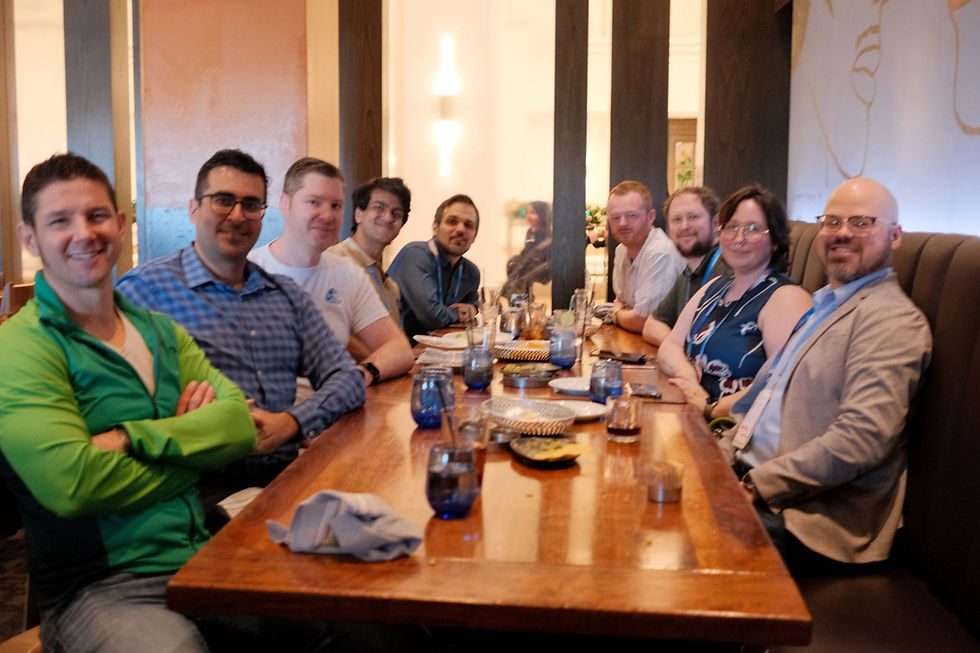
This marks our final on-site wrap-up from CES 2026. To everyone we had the pleasure of speaking with this week, thank you for taking the time to help us learn, sense and digest what matters most, so we can continue to deliver the highest-quality insights, content, and reporting from CES each year. We look forward to reconnecting in the coming weeks to help turn what you learned into action. And before you know it, we’ll be back in Las Vegas to kick off 2027. See you next year.
- The SBD Automotive CES Team